Technology Solutions Overview
Complete Technology Lifecycle Services
MOIT delivers comprehensive technology solutions covering the entire lifecycle - from strategic planning and assessment through implementation, migration, optimization, and ongoing support. Our proven methodologies, deep technical expertise, and 19+ years of technology experience ensure successful outcomes for enterprise transformations.
What Sets Our Technology Practice Apart
1. Multi-Domain Integration
Unlike single-focus vendors, MOIT provides integrated expertise across DevOps, Cloud Computing, Data Science, Salesforce, and Data Center domains. DevOps pipelines deploy to cloud platforms; cloud data feeds analytics systems; analytics inform CRM strategies; and infrastructure underpins everything.
2. End-to-End Capabilities
From strategic assessment to post-implementation optimization, we handle every phase of technology transformation. No need to engage multiple vendors - we provide complete lifecycle services across all technology domains.
3. Industry-Specific Expertise
Deep experience in Manufacturing, Automotive, Chemicals, Life Sciences, Telecommunications, and Wire & Cable with pre-configured solutions and industry best practices tailored to your sector's unique requirements.
4. Technical Excellence
Certified consultants with expertise in the latest technologies: AWS/Azure/Google Cloud, Docker/Kubernetes, Hadoop/Spark/Kafka, Salesforce (all clouds), CI/CD tools (Jenkins, GitLab), infrastructure as code (Terraform, Ansible), and PaaS platforms (Cloud Foundry, Bluemix, SAP BTP).
Technology Solutions Portfolio
Five Comprehensive Technology Solutions
Explore our complete portfolio of technology solutions with detailed capabilities, technical specifications, case studies, and implementation guidance. Click the solution name or 'Explore Solution →' to learn more.

DevOps
Accelerate software delivery through DevOps practices. Continuous integration/delivery (CI/CD) pipelines, microservices architecture, infrastructure as code (IaC), and containerization enable rapid, reliable deployments with 50% faster time-to-market and 90% automation of manual tasks.

Cloud Computing
Become cloud-first with AWS, Azure, or Google Cloud. Cloud-native development, PaaS platforms, legacy modernization, and hybrid integration delivering 40-60% infrastructure cost reduction, elastic scalability, and global reach across 20+ regions.

Data Science
Create data-driven enterprises with big data platforms (Hadoop, Spark, Kafka), machine learning, and real-time analytics. Transform raw data into competitive advantages with 10x faster data processing, 70% lower mainframe costs, and predictive insights.

Salesforce
Transform customer relationships with Salesforce—the world's #1 CRM. Sales Cloud, Service Cloud, Marketing Cloud, CPQ, Tableau analytics, Experience Cloud, and integration services delivering 25-40% higher customer retention and 30% faster sales cycles.

Data Center Services
Build resilient infrastructure with carrier-neutral colocation, private cages, network connectivity (Metro/IP/Cloud Connect), and turnkey deployments. 99.99% SLA, 50% lower infrastructure costs, and compliance certifications (ISO 27001, SOC 1/2, PCI DSS).
Technology Excellence
What Makes MOIT Technology Solutions Different
Why Technology Excellence Matters
Technology transformations are complex, high-risk initiatives. Our integrated approach, deep expertise, and proven delivery methods provide the structure and discipline that ensure predictable outcomes. These capabilities are the foundation of our consistent project success.
Integrated Technology Approach
- DevOps CI/CD pipelines deploy microservices to cloud platforms
- Cloud infrastructure hosts big data analytics processing
- Analytics insights feed Salesforce CRM for predictive engagement
- Enterprise data centers provide a resilient foundation for hybrid cloud
Cloud-Native & Modern Architecture
- Microservices architecture for independent service scaling
- Containerization (Docker/Kubernetes) for portability
- Infrastructure as Code (Terraform/Ansible) for automation
- API-first design for seamless integration
DevOps Technology Stack
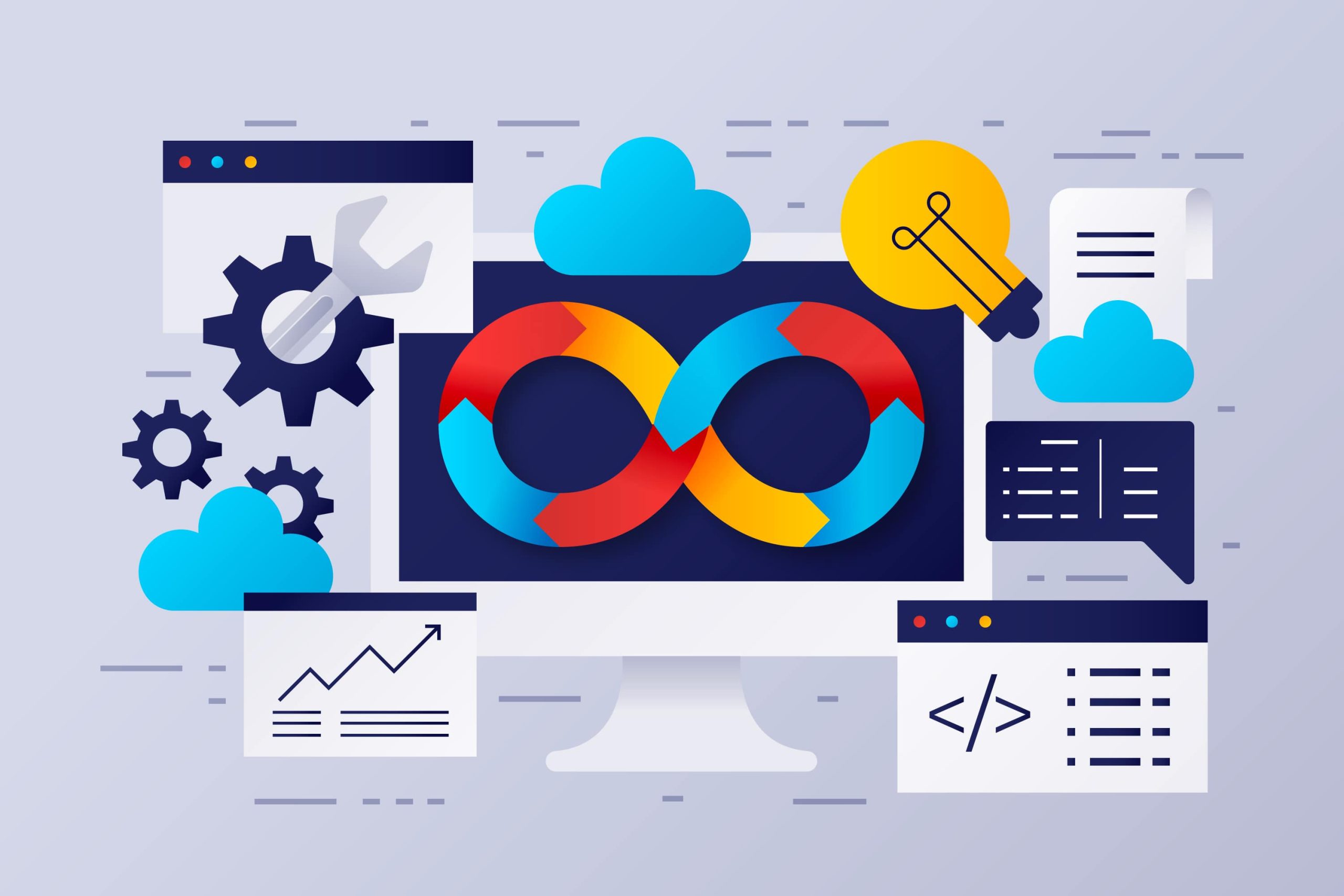
DevOps leverages diverse tools: Source control (Git, GitHub, GitLab), CI/CD (Jenkins, GitLab CI, CircleCI, Azure DevOps), Configuration management (Ansible, Chef, Puppet), Infrastructure as code (Terraform, CloudFormation), Containerization (Docker, Kubernetes, OpenShift), Monitoring (Prometheus, Grafana, Datadog, New Relic), and Cloud platforms (AWS, Azure, Google Cloud).
Tool selection depends on organizational needs, existing technology investments, and team skills.
Technology Implementation Approach
How We Deliver Technology Projects
Our Delivery Framework
Every SAP project follows a structured approach that combines the DIMP methodology with industry best practices (Agile, SAFe, PMP). This ensures quality, minimizes risk, and delivers measurable business value.
Phase 1: Strategic Assessment
- Business objectives and requirements gathering
- Current state analysis and technology maturity assessment
- Roadmap and business case development
Phase 2: Solution Design
- Technical architecture and solution blueprint
- Integration design and data migration strategy
- Technology selection and proof-of-concepts
Phase 3: Implementation
- Agile sprints with continuous validation
- Infrastructure provisioning and configuration
- Testing, security hardening, and performance optimization
Phase 4: Deployment & Transition
- Cutover planning and execution
- Knowledge transfer and documentation
- Hypercare support (4-8 weeks)
Phase 5: Optimization & Support
- Performance monitoring and tuning
- Cost optimization and right-sizing
- Ongoing managed services and enhancements
Culture Transformation Focus
DevOps is fundamentally a cultural transformation, not just tooling. We focus equally on people, processes, and technology, establishing collaborative workflows, shared responsibility, blameless post-mortems, and continuous learning.
Change management, executive sponsorship, and cross-functional training ensure sustainable adoption.

DevOps Capabilities & Solution Components
Four Core DevOps Capabilities Transforming Software Delivery
Continuous Integration (CI)
Continuous integration is a software development practice where developers frequently merge code changes into a central repository. After submission, automated builds and tests are conducted. The primary goals are to identify and fix bugs more quickly, enhance software quality, and accelerate the validation and release of software updates.
Key Benefits
- 50% Faster Bug Detection
Automated testing after each commit identifies defects within hours versus weeks. - 80% Reduction in Integration Issues
Frequent integration prevents complex merge conflicts and integration nightmares. - Improved Code Quality
Automated code quality checks, security scans, and test coverage analysis maintain standards. - Faster Time-to-Market
Continuous validation enables rapid feature release without compromising quality.
Solution Components
1. Source Control Management
Git-based repositories (GitHub, GitLab, Bitbucket) with branching strategies (GitFlow, trunk-based development). Pull request workflows with code review gates ensure quality before merge.
2. Automated Build Pipeline
Jenkins, GitLab CI, Azure DevOps, or CircleCI automatically trigger builds when code is committed. Parallel build execution and distributed build agents accelerate compilation for large codebases.
3. Automated Testing Suite
Unit tests, integration tests, API tests, UI tests, security scans (SAST, DAST), and code quality analysis (SonarQube). Test execution parallelization and selective testing optimize pipeline speed.
4. Artifact Repository
Nexus, Artifactory, or cloud artifact storage for compiled binaries, container images, and dependencies. Versioned artifacts enable rollback and deployment consistency.
Continuous Delivery (CD)
Continuous delivery is a software development approach in which code changes are automatically built, tested, and released to production. It extends continuous integration by deploying all code changes to testing and production environments after they have been built. When implemented effectively, developers always have a deployment-ready build artifact that has successfully passed a standardized testing process.
Key Benefits
- Daily or Hourly Deployments
Automated deployment pipelines enable multiple daily releases versus quarterly deployments. - 60% Faster Feature Delivery
Automated release process eliminates manual deployment delays and bottlenecks. - Lower Deployment Risk
Small, frequent changes reduce risk compared to significant, infrequent releases. - Automated Rollback Capability
One-click rollback to the previous version if issues are detected post-deployment.
Solution Components
1. Deployment Automation:
Spinnaker, Argo CD, or Jenkins for orchestrated deployments across multiple environments (dev, test, staging, production) with approval gates and rollback mechanisms.
2. Environment Management:
Infrastructure as code (covered separately) ensures identical environment configuration across development, testing, and production to eliminate 'works on my machine' issues.
3. Blue-Green & Canary Deployments:
Advanced deployment strategies minimize downtime and risk. Blue-green swaps traffic between environments. Canary progressively routes traffic to the new version while monitoring.
4. Release Management:
GitOps approach where infrastructure and application state are defined in Git. Changes to Git trigger automated deployments, maintaining a complete audit trail.
Microservices Architecture
Microservices architecture is a design approach for building a single application as a collection of small services. Each service operates independently and communicates with others via well-defined interfaces, typically using lightweight mechanisms such as HTTP APIs. Microservices are organized around specific business capabilities, with each service focused on a single purpose. You can employ various frameworks or programming languages to develop microservices that can be deployed independently.
Key Benefits
- Independent Scaling
Scale individual services based on demand rather than the entire monolithic application - Technology Flexibility
Each microservice can use an optimal technology stack for its specific requirements. - Faster Development Cycles
Small, focused services enable parallel team development and rapid feature delivery. - Fault Isolation
Service failures are contained to individual components rather than cascading through the entire application.
Solution Components
1. Service Design & Decomposition:
Domain-driven design principles decompose monoliths into services aligned with business capabilities. API-first design ensures clean service contracts.
2. Containerization:
Docker containers package microservices with dependencies, ensuring consistency across environments. Container registries (Docker Hub, ECR, ACR) store and distribute images.
3. Container Orchestration:
Kubernetes, OpenShift, or cloud-managed services (EKS, AKS, GKE) automate deployment, scaling, networking, and lifecycle management of containerized microservices.
4. Service Mesh:
Istio, Linkerd, providing service-to-service communication, load balancing, service discovery, circuit breaking, and observability without modifying application code.
Infrastructure as Code (IaC)
Infrastructure as code is a practice that allows provisioning and management of infrastructure using code and software development techniques, such as version control and continuous integration. The cloud's API-driven model enables developers and system administrators to interact with infrastructure programmatically and at scale, rather than manually configuring resources. Engineers can use code-based tools to manage infrastructure in much the same way they handle application code.
Key Benefits
- 90% Faster Infrastructure Provisioning
Automated provisioning creates complete environments in minutes versus weeks. - Configuration Consistency
Code-defined infrastructure eliminates configuration drift and 'snowflake servers. - Infrastructure Version Control
Git-based infrastructure definitions enable change tracking, review, and rollback. - Disaster Recovery Automation
Infrastructure-as-code enables rapid environment recreation for disaster recovery.
Solution Components
1. Declarative Infrastructure Tools:
Terraform (cloud-agnostic), AWS CloudFormation, Azure Resource Manager templates defining desired infrastructure state. Tools handle dependency ordering and parallel provisioning.
2. Configuration Management:
Ansible, Chef, Puppet for automated server configuration, package installation, and ongoing compliance, ensuring servers maintain the desired state.
3. Immutable Infrastructure:
Never modify running servers. Instead, provision new servers with updated configuration and replace old servers. Eliminates configuration drift and simplifies rollback.
4. Policy as Code:
Terraform Sentinel, AWS Service Control Policies, Azure Policy, enforcing security, compliance, and cost governance through code-based policies, preventing non-compliant infrastructure.
INDUSTRIES WE SERVE
Technology Solutions for Your Industry
Industry Expertise
Deep industry knowledge ensures we understand your unique business processes, regulatory requirements, and competitive challenges. Our technology solutions are tailored to industry-specific needs, leveraging preconfigured templates and best practices.
-
Manufacturing
IoT data analytics, predictive maintenance, supply chain optimization, MES integration Learn More: → -
Automotive
Connected vehicle data, dealer portal CRM, warranty analytics, supplier collaboration Learn More: → -
Chemicals
Process analytics, regulatory compliance automation, and safety management systems Learn More: → -
Life Sciences
Clinical trial data management, regulatory submissions automation, and pharmacovigilance Learn More: → -
Telecommunications
Customer data platforms, network analytics, and billing system modernization Learn More: → -
Wire & Cable
Reel tracking analytics, inventory optimization, and cut-to-length automation Learn More: →
Technology Success Metrics
Proven Technology Results
Technology Transformations
Successful projects delivered
Cloud Migrations
AWS, Azure, Google Cloud
Years of Technology Expertise
Deep Technology knowledge
DevOps Implementation
CI/CD pipeline expertise
Average Speed Improvement
Faster Deployment Cycles
Infrastructure Cost Reduction
Cloud migration savings